:quality(75))
Case study
Building audiences with synthetic data in seconds
- £17m
- a year of planner time returned to the business.
Agentic Modernisation
You pay every year for software that still does not fit how you work. Your rented SaaS becomes a custom agentic system you own outright.

What changes
A build you pay for once, against a licence you pay for forever. It runs one workflow at a time, beside the tool you already pay for.
Replacement runs beside the tool you already pay for. You stop paying when the old system has nothing left to carry.
The rules that actually run your business sit inside a system whose authors have long gone. They get read out of the code before anything is rebuilt.
One integration layer rather than a point to point tangle that grows with every tool you add. Your systems stay exactly where they are.
What you get
The workflows your team genuinely uses in the tool you licence, rebuilt as agentic software that fits your process rather than a vendor average. It runs beside the licence, taking one workflow at a time, until the old tool carries nothing.
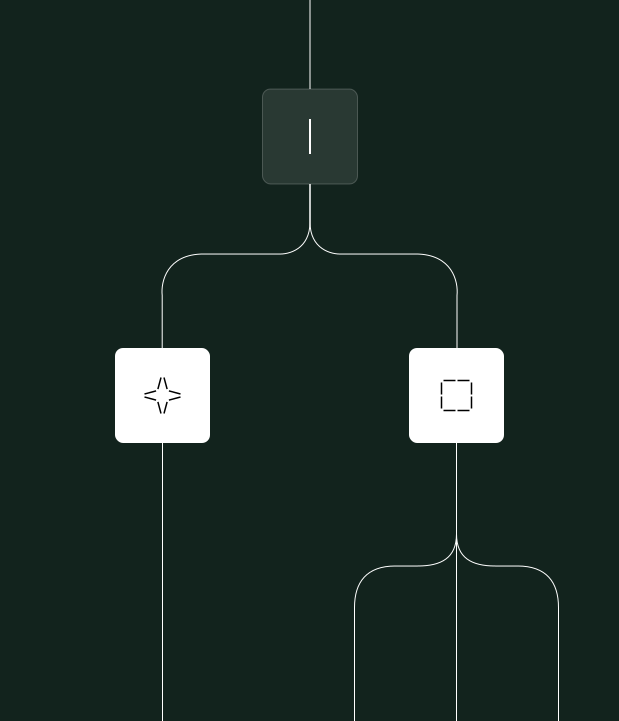
Years of undocumented business logic sit inside the system you want to leave. It gets read out of the code and the data, then confirmed with the people who rely on it. You hold the specification before anything is rebuilt.
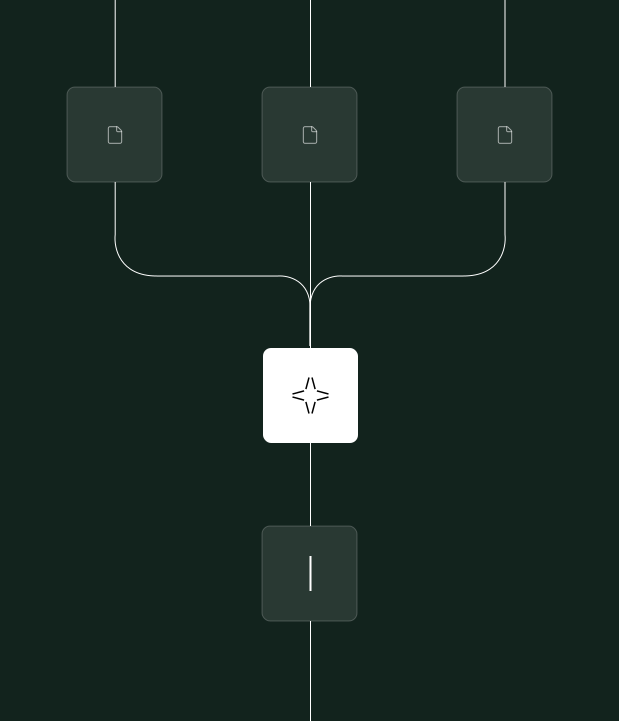
One governed layer that your systems read and write through, in place of the point to point links you currently pay someone to maintain. Your systems stay exactly where they are, and the next agent connects without another project.
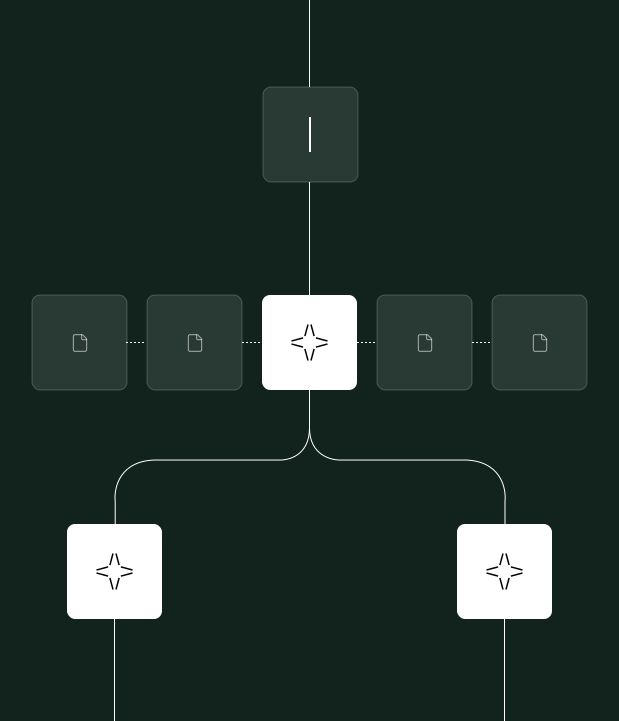
Pipelines that get your data in, cleaned and typed, with enterprise guardrails from the first day. Monitoring keeps the models accurate once they are running in production rather than only on the day they launch.
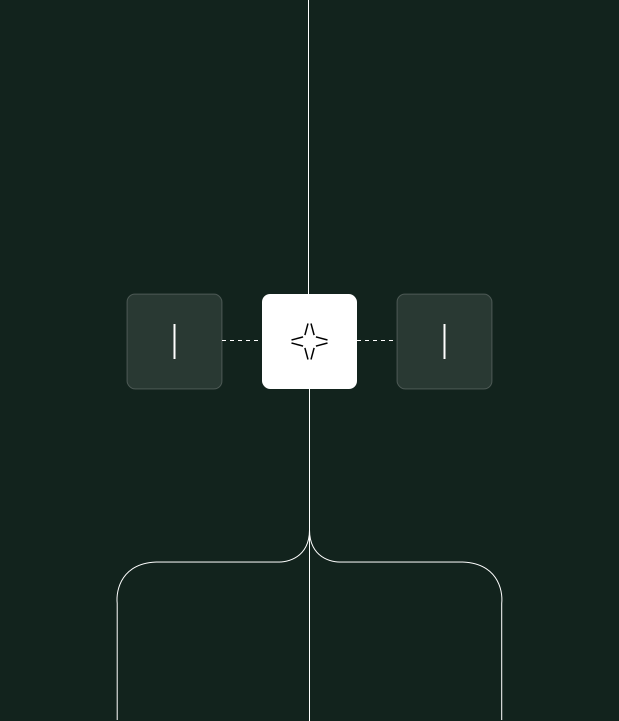
It runs in your own cloud accounts under your own security controls. You keep the codebase and the IP, so you stay because you want to, not because you have to.
Case study
Where it runs

Your cloud, your data. Nothing leaves your estate.

Human approval gates, an audit trail on every run.

Cyber Essentials Plus certified.

You keep the system, the codebase and the IP.

Inside your business alongside the people who do the work.

Senior, sized to the problem.

No handoffs, no timezone gaps.

G-Cloud 15 supplier. Google Cloud Partner.
Buying carries a risk you already hold: a roadmap you do not set and a renewal you cannot refuse. Build risk is the kind you can manage, by shipping one workflow at a time against live use rather than delivering everything on a date.
That is normal, and it is exactly why replacement is staged. The integration layer lets the new system run alongside the old one, workflow by workflow, until the old one carries nothing.
Most enterprise SaaS gets used at a fraction of its surface area. The first piece of work establishes which parts your people actually touch, which is almost always a smaller set than the licence implies.
When the tool is commodity and the vendor fits your process well enough. Also when you want the replacement live before the first workflow has proved itself, or when nobody internally can own the system once it is yours.
Keep going
Bring your costliest workflow. Walk out knowing what it could return and what it would take to build.