
Case study
Loan portfolios onboarded in weeks, not months
- £14m
- of labour cost out, every year.
Agentic Operations
Hand the repetitive work to agents. They take on the workflows that cost you the most time and money, so your people can focus on the calls that need them.

What changes
Not a copilot your team has to remember to open. Agents that pick the work up when it arrives and carry it through to done.
Headless agents that carry a whole workflow from the moment work arrives until it is closed.
Start with the process that runs most often and holds the least risk, rather than the one you most want fixed. That is the one that pays for the next.
Coding agents across your own software lifecycle, so testing and refactoring stop eating the week your team needs for the build itself.
What you get
One agent per workflow, running headless. It reads the work as it arrives, pulls what it needs from your systems, applies your rules and produces the outcome. There is no window your team has to remember to open.
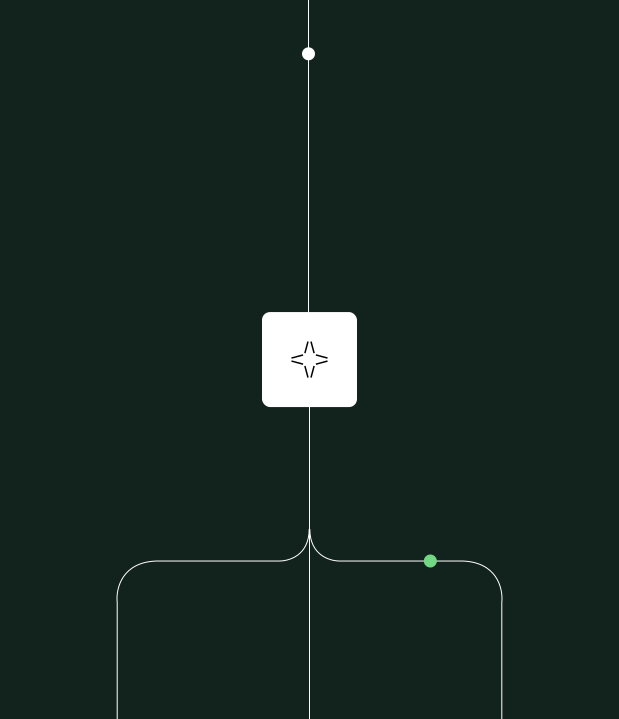
Gates sit wherever a decision carries weight, so your people sign work off rather than key it in. Every correction they make is recorded against the run and feeds the next one.
Every run records what the agent read, which systems it touched and why it acted as it did, exportable per run. That record is what gets an agent past risk and audit, and it is the thing most AI pilots cannot produce when someone asks.

Permissions, integrations, guardrails and audit, built once with the first agent and reused by every one after it. It is why the second workflow costs a fraction of the first. And it all belongs to you.
It runs in your own cloud accounts under your own security controls, and nothing leaves your estate. You keep the system, the codebase and the IP, so you stay because you want to, not because you have to.
Case study
Where it runs

Your cloud, your data. Nothing leaves your estate.

Human approval gates, an audit trail on every run.

Cyber Essentials Plus certified.

You keep the system, the codebase and the IP.

Inside your business alongside the people who do the work.

Senior, sized to the problem.

No handoffs, no timezone gaps.

G-Cloud 15 supplier. Google Cloud Partner.
Most stalls happen because the tool needed clean structured input and the real work is neither. Every workflow is scored before anything is built, and the first one has to prove itself before the second starts.
Enough to run the first workflow. The first piece of work tells you which workflows already run on the data you hold today and what the rest would cost to make usable, so you have that answer before anyone commits to a data programme.
A person approves before anything leaves the system. Every run leaves a trace showing what the agent read and why it acted, which is what makes this survive a risk review.
Keep going
Bring your costliest workflow. Walk out knowing what it could return and what it would take to build.